
Cleaning a sofa at home: a step-by-step guide
You can freshen up a sofa yourself if you know what fabric it is made of and how much water it can take. We explain how to clean a sofa at home, what to avoid, how long a sofa takes to dry after cleaning and when it makes more sense to leave it to professionals.
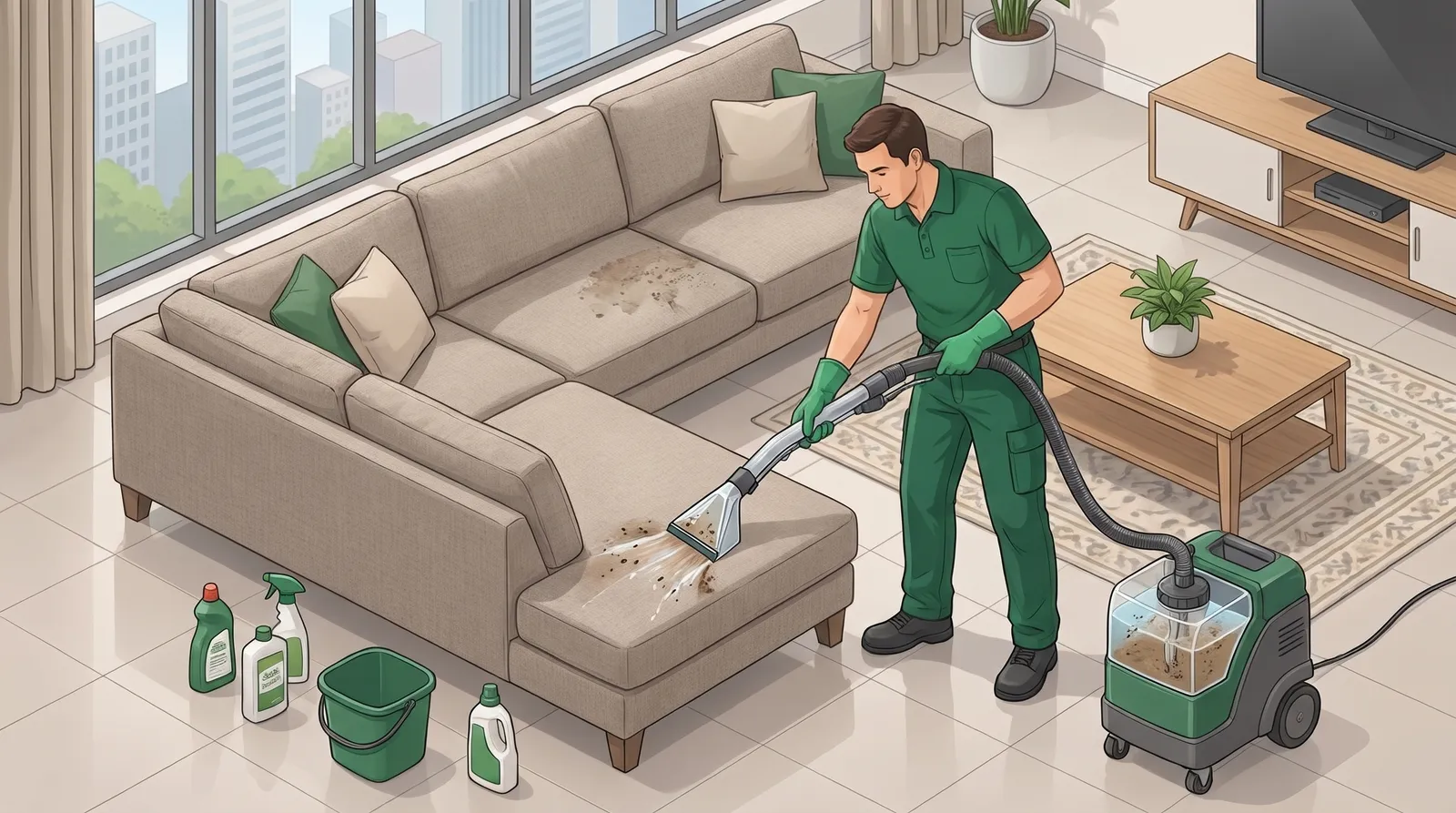
- Before you start, check the label: the symbol W or WS means the fabric can be cleaned with water, S means it can’t.
- The key rules are thorough vacuuming, a test on a hidden spot and as little water as possible.
- A sofa usually takes from a few hours to over ten hours to dry after cleaning – depending on the fabric, the amount of water and ventilation.
- For large, old stains, urine odour, delicate fabrics or a whole corner sofa, extraction cleaning works better.
- Professional sofa or corner sofa cleaning in Warsaw costs from 150 zł with us.
Is cleaning a sofa at home worth it?
It is – as long as you correctly assess what you are dealing with. Cleaning a sofa at home works for fresh stains, slightly greyed seats and armrests, or removable covers that can go in the washing machine. Trouble starts when someone tries to wash a whole corner sofa in one afternoon with an ordinary sponge and a bucket of water: the fabric gets soaked, the filling takes ages to dry, and the upholstery is left with “map-shaped” water marks.
In this guide we go through the whole process – from checking the label, through choosing products, to drying. At the end we explain when doing it yourself is more of a waste of time and you are better off with professional upholstery cleaning.
Step 1: check the label and the type of fabric
Under the seat, on the underside of the furniture or on the zip of a cover there is usually a label with care symbols. This is the most important information before cleaning. The letter codes refer specifically to upholstery cleaning:
- W – the fabric can be cleaned with water and water-based products (including foam and a carpet washer)
- S – dry cleaning or solvent-based products only; water may leave marks or discolour the material
- WS – both methods are allowed, water-based and solvent-based
- X – vacuuming and brushing only, no cleaning products at all
Step 2: thorough vacuuming
This is the step most often skipped, yet half the result depends on it. Sand, crumbs and pet hair left in the fabric turn into mud when wet and get pushed deeper into the fibres. Take off the cushions and vacuum the sofa on all sides: seat, back, sides, the gaps between cushions, the space underneath them and the seams. Use a crevice tool for the nooks and a soft brush attachment for surfaces.
If you have a dog or cat, run a rubber glove or a special pet hair brush over the fabric before vacuuming – matted hair is then easier to pick up. On velour and microfibre, always brush in one direction.
Step 3: test on a hidden spot
Before applying any product to a visible part of the sofa, test it underneath, on the back of the backrest or under a cushion. Apply a little, wait a few minutes, press a white cloth against it gently. If the cloth picks up colour, or the fabric changes colour or texture – don’t use that product on the whole sofa.
It is worth testing even when you have a tried-and-tested upholstery product. Sofas from different manufacturers, even with similar-looking fabric, can react quite differently.
How to clean a sofa? Proven methods
Once you know the fabric can handle water, you can move on to the actual cleaning. The question of how to clean a sofa has several good answers – the choice depends on whether you want to remove a single stain or freshen up the whole piece.
Upholstery foam. The safest method for fabrics marked W. The foam is applied to the surface, worked in with a soft brush and, once dry, vacuumed up together with the dirt. The fabric barely gets wet, so the risk of water marks is small.
Water with a mild detergent. A few drops of washing-up liquid or plain soap in a litre of lukewarm water, whisked into a foam. Apply only the foam to the fabric, not the water, and lift it off with a damp, well-wrung microfibre cloth. Finally, wipe the surface with a cloth dampened with clean water to remove detergent residue – otherwise the fabric will be sticky and get dirty again quickly.
Carpet washer (wet vacuum). It gives a better result than cleaning by hand because it immediately sucks up the dirty water. Home machines usually have weaker suction than professional extractors, though, so it is easy to soak the sofa. Do several suction-only passes after each pass with water and don’t pour on liquid “just in case”.
Sofa stains: coffee, wine, grease, ballpoint pen
The same rule applies to every stain: the faster you act, the better your chances. First blot the liquid with kitchen paper, pressing rather than rubbing – rubbing spreads the stain and works it into the fibres. Clean from the outside in so the stain doesn’t get bigger. Below are general tips for water-washable fabrics – always after a test first.
| Type of stain | What to do | What to avoid |
|---|---|---|
| Coffee, tea | Blot, wipe with lukewarm water with a little washing-up liquid, then clean water | Hot water, which sets the tannins |
| Red wine, juice | Blot, rinse with cold water, then with a mild detergent solution | Rubbing, and salt on delicate fabrics |
| Grease, sauce | Sprinkle with starch or talc, wait, vacuum, then wipe with washing-up liquid foam | Lots of water straight away – it will spread the grease |
| Ballpoint pen | Dab gently with a cotton pad and a small amount of alcohol, changing the pad | Using alcohol on fabrics marked W without a test |
| Mud | Let it dry, crumble it off and vacuum, only then clean the mark | Rubbing wet mud |
| Pet urine | Blot, rinse with water, use an enzyme cleaner | Products with ammonia – the smell may encourage the pet to come back |
What not to do when cleaning a sofa
A lot of upholstery damage comes from good intentions and tips found online. Before you reach for another “home remedy”, check it isn’t on this list.
- Don’t pour water directly onto the fabric – excess moisture soaks into the foam and causes water marks and a musty smell
- Don’t use bleach, chlorine or strong laundry stain removers – they can discolour the fabric
- Don’t mix several products at once – they can react with each other and with the dye
- Don’t dry the sofa with a hairdryer or fan heater up close – hot air can deform the fibres and set stains
- Don’t iron upholstery
- Don’t put covers in the washing machine unless the label says you can – they may shrink
- Don’t sit on a wet sofa or put coloured clothes or newspapers on it
How long does a sofa take to dry after cleaning?
This is one of the most common questions. The answer is: it depends. How long a sofa takes to dry after cleaning depends mainly on how much water got into the fabric and filling. After cleaning with foam or wiping with a damp cloth, the surface usually dries within a few hours. After using a carpet washer, when the water has gone deeper, it can take from a few hours to over ten, and with soaked foam even longer.
Drying time is also affected by the type of fabric (synthetics dry faster than cotton and linen), room temperature, humidity and ventilation. In winter, with the heating on and a window slightly open, a sofa will dry faster than on a damp autumn day with the windows shut.
- open a window or switch on ventilation – air exchange is the most important factor
- take off the cushions and stand them on their edge so they dry on all sides
- set up a fan to blow air onto the sofa from a distance
- don’t cover the sofa with a blanket or plastic sheeting
- before using it, check with your hand that the seat isn’t damp inside
Home vs professional cleaning – a comparison
Professional sofa cleaning differs from home cleaning above all in the equipment. An extractor pushes cleaning solution into the fabric and immediately sucks it back out with great force, so dirt is removed from deeper layers and less moisture stays in the furniture. A professional also chooses products to suit the specific fabric and type of stain, and rinses the upholstery of detergent residue after cleaning.
| Cleaning at home | Professional cleaning | |
|---|---|---|
| Equipment | Cloths, foam, home carpet washer | High-suction extractor, brushes, vacuum cleaner |
| Cleaning depth | Mainly the surface of the fabric | The fabric and the top layer of filling |
| Risk of water marks | Higher with too much water | Lower thanks to extraction and rinsing |
| Drying time | Depends on the amount of water, often longer | Usually a few hours |
| Stains and odours | Fresh, small ones | Older stains and odours too, assessed before cleaning |
| Cost | Cleaning products and your time | From 150 zł for a sofa or corner sofa |
How to look after your sofa so it needs cleaning less often
The cheapest clean is the one you can avoid. A few simple habits keep upholstery looking fresh for longer and don’t give stains time to set.
Vacuum the sofa once a week, including the space under the cushions. Every so often, turn the seat cushions and swap them around so they wear evenly. On the armrests, which get dirty fastest, removable throws or machine-washable covers work well. Position the sofa so it isn’t in full sun all day – UV rays slowly fade the fabric. Keep kitchen paper and a mild upholstery cleaner to hand so you can deal with a stain straight away, not in the evening.
When it is better to have your sofa cleaned by professionals
DIY cleaning has its limits. It is worth calling a company straight away when the whole sofa is dirty rather than one spot; when the stains are old and you don’t know what caused them; when the fabric is delicate (velour, chenille, linen) or marked S; when the furniture smells of urine, smoke or mustiness; and when it is a large corner sofa with lots of cushions – washing it by hand would take a whole day.
Professional cleaning also makes sense before important moments: before selling or letting a flat, after tenants move out, before a baby arrives or after illness in the household. It is often combined with flat cleaning or house cleaning – one team, one date.
Sofa cleaning – prices in Warsaw
At MagCleaning, sofa or corner sofa cleaning costs from 150 zł, armchairs and chairs from 25 zł/pc, mattresses from 100 zł and rugs from 15 zł/m². These are indicative prices – the final amount depends on the size of the furniture, the fabric and how dirty it is. The quickest way to get a price is to send photos on WhatsApp +48 881 331 880. We clean on site, in Warsaw and the surrounding area, without taking the furniture away. You will find the full list of rates in the price list, and you can work out a general estimate in the calculator.
Don’t want to risk water marks? We will clean your sofa or corner sofa on site, from 150 zł. Send us photos – during working hours we will call you back within 15 minutes with a free quote.
Upholstery cleaning →Questions and answers
What is the best way to clean a sofa at home?
How long does a sofa take to dry after cleaning?
Can you clean a sofa with a carpet washer?
How do you get rid of a smell from a sofa?
How often should a sofa be cleaned?
How much does professional sofa cleaning cost?
Quote in 1 minute
Choose your premises, answer a few questions and see an estimated price. No sign-up, no obligation.
- 01You answer a few questionsProperty type, floor area or rooms, frequency, date.
- 02You see an estimated priceStraight away on screen, no waiting for an email.
- 03We call back within 15 minutesWe arrange a site visit and send you a written offer.
Would you rather talk straight away? +48 881 331 880 · WhatsApp
Office cleanliness and employee health
Shared keyboards, door handles, the coffee machine and the kitchen make it easy for germs to pass from hand to hand in an office. We show wh…
Block paving cleaning in spring: when and how
After winter, block paving is grey from salt and grit, moss is growing in the joints and weeds are coming up along the kerbs. We explain whe…
Describe your premises and we’ll work out the price
We call back within 15 minutes during working hours. Site visits and quotes for larger premises are free.